Environmental

You are currently browsing the archive for the Environmental category.

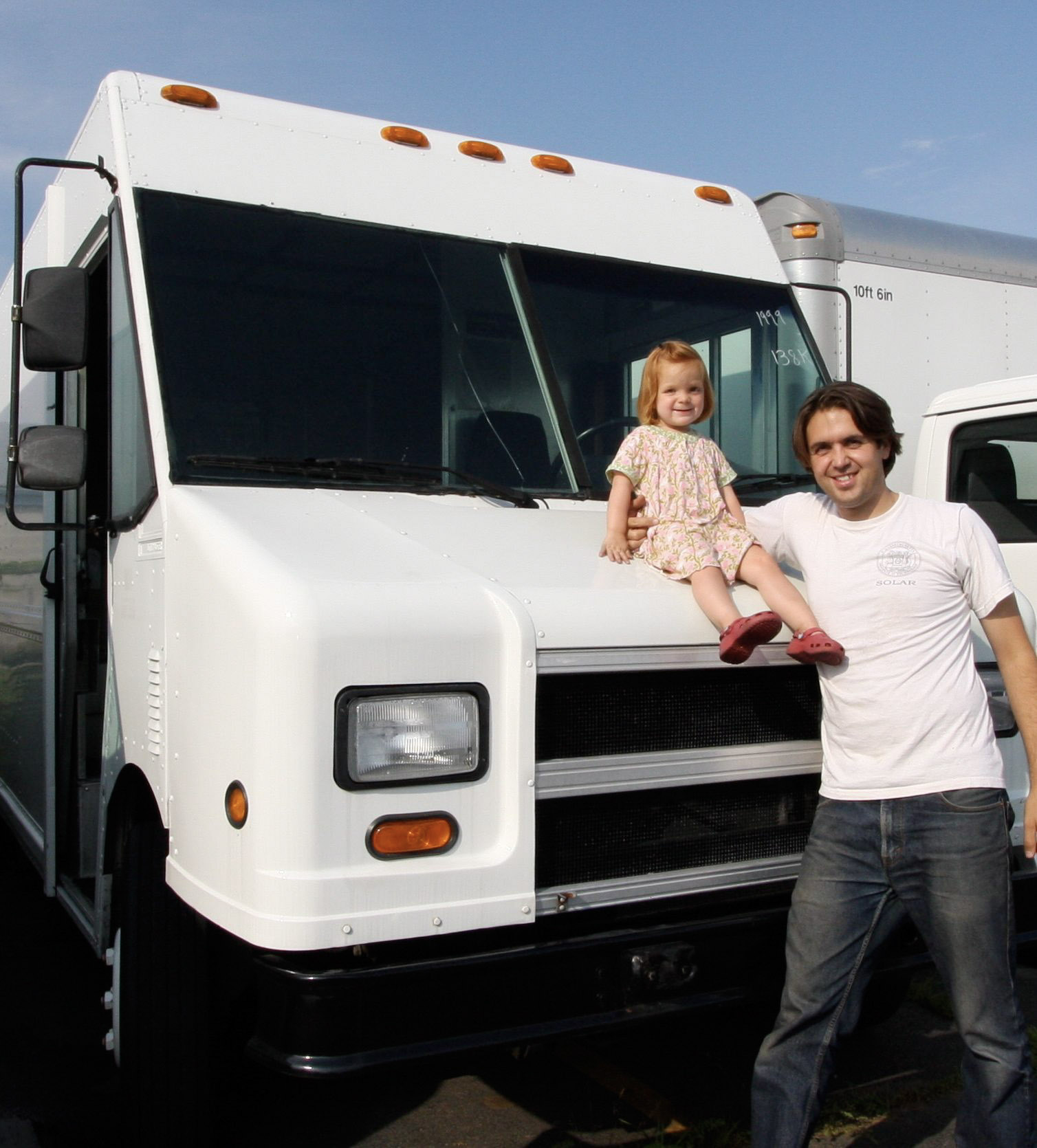
The guys at the kitchen say somebody backed into our van in the middle of the night. I’d like to think that was the case. Either way, what a hassle.

I’m going to get this fixed. It’s going to cost us too much money, but I like cars and think it’s important that we take pride in and care for the things we own. I like my things, I like to take care of them, and I like them to last. Materialism is a powerful weapon against waste.

This was spotted on the most recent trip to my furniture maker, the ones making the furniture for the restaurant in Harvard Square. Isn’t it brilliant?

We wanted to do all custom furniture, but our budget was very tight. My architects had worked with a guy they thought would be perfect. I saw this contraption and knew I was in the right place. I’ll say it again, isn’t that brilliant?

I love how limited resources combined with necessity can spurn creativity and invention. This is at the core of the Yankee ethic that I love so deeply. Need a dust pan? Slice that bucket in half, nail it to a piece of wood. Know what, it’s re-using without being “green,” and it’s cheap without being from Wal-Mart. Isn’t that brilliant?

Delis

IMG_2273

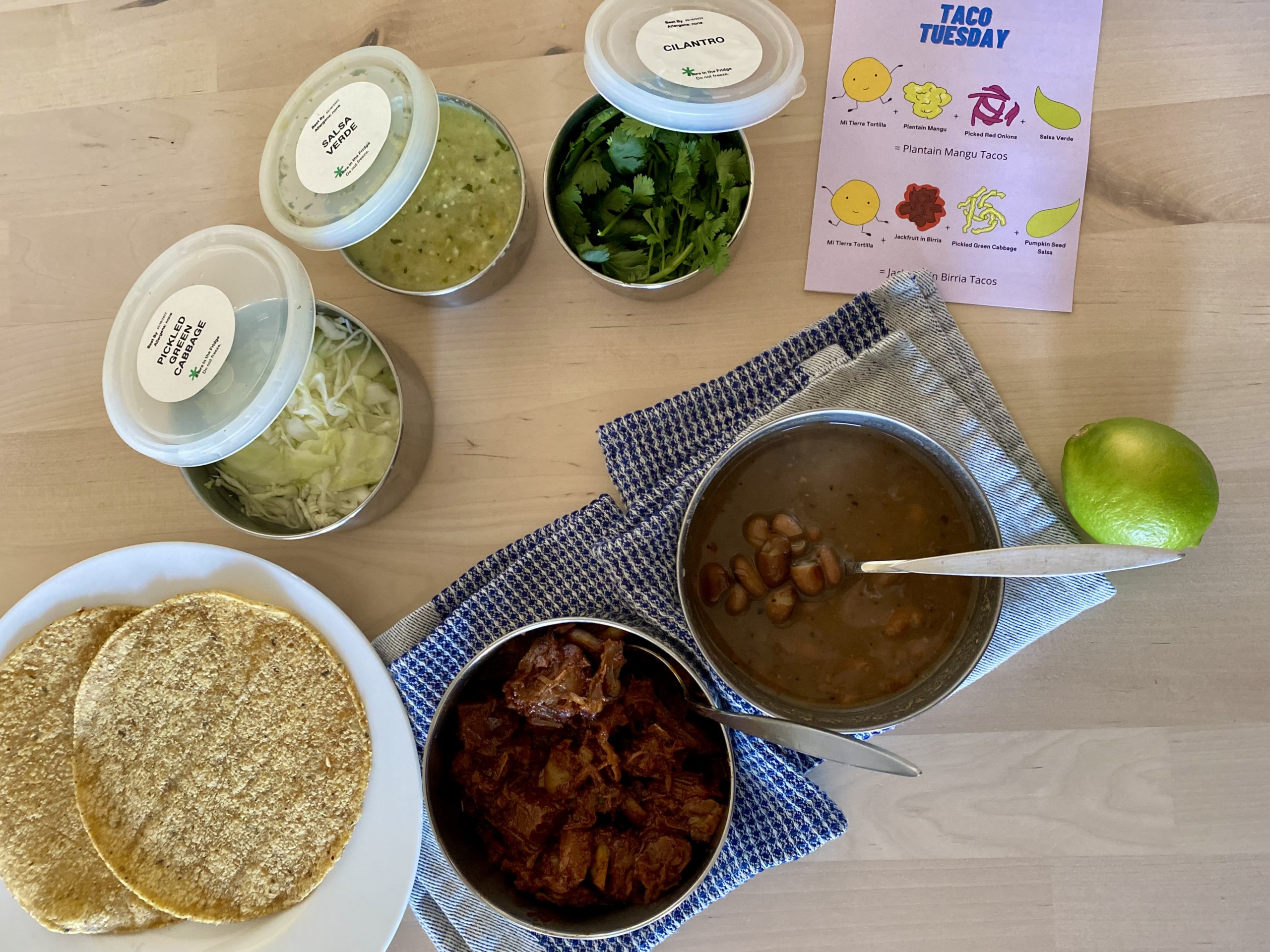
One of the first things Rolando went out to buy when we were getting started was “Delis.” This is the affectionate term for these plastic containers. They come in 1 cup, 2 cup, and 4 cup sizes. We use them for everything, from storing food to measuring flour.

After playing around with a bunch of different salad containers, including some expensive square containers, we’ve come back to delis. They’re just so simple and universal. So we’re asking our packaging supplier to throw some PLA pellets in the hopper and fire us up a bio-degradable version. Add a biodegradable sticker on the lid and we’ll be in business.

Pedal Power

IMG_2240

As many of you know, we’re easing into catering for select groups. This past week we had an opportunity to work with a cool new pedal powered delivery company. They pulled up. We gave them food. We gave them money. They delivered the food. Worked great.

cup

We’re going to need to get more official over the next few months. You know: packaging, proper uniforms, etc. First up: the hot-cup.

Some of you may know that I have this dream of a restaurant where zero food waste gets caught up in landfills. So we’re designing our packaging to be 100% compostable. That’s right, compostable everything. That means no trash, no recycling, just a compost bin at our restaurant.

Another design goal: keep it simple. Fewer products, easier for us to keep in order, and lower the cost.

And of course, we want our packaging to work for you. Expect not to burn your hand when you hold a hot cup, to be able to take our food away, even when it’s raining, even if it’s a large order. We want you to be able to hold our food without feeling like you’re a juggler. And we want everything to feel and look pleasant and sometimes exciting. Most of all, we want the packaging to preserve the food quality.

More about cups after the break…

Read the rest of this entry »

We pride ourselves on cleanliness, but it appears we screw that up occasionally.

This tomato plant and flat leaf parsley have taken root at our loading dock. Pretty amazing. Little seeds from our tomatoes became lodged between the parking lot and brick wall and now we see the beginings of tomatoes.

I’ve noticed several tomato plants around the truck at 20 Carleton as well. Likely our doing. Just amazing, hunh?

The truck has a bunch of systems: fresh water, waste water, propane, ac power, dc power.

We use a super quiet Honda generator to power the AC. Last week ours died ;explaining the morning start issues Monday and Tuesday. We bought a new generator. And the best thing is that this one weighs 1/2 of what the last one weighed!

So you’ll notice we’re undergoing a transition to a more branded Clover. More about where that’s all going later. But you may have noticed our logo on the banner of this blog. I have real business cards if you’ve come and asked for contact info. We’re wearing Clover hats. And now the whiteboards are getting an update.

I have a stencil on order for the logo at the top of the whiteboard. So here I am getting the boards ready for that, and for some more legible menus.

When I was at MIT we worked out all of our ideas, big and small on whiteboards. So it was a natural place for us to post the daily menu for the truck. Problem was that once the way wiped away off of the paint the marker started to penetrate. A bunch of you were telling me I could use Windex, etc. Really the paint was stained and nothing was going to help.

But I found this cool whiteboard paint. It’s a 2 part system, must be some sort of epoxy. 4 coats later the whiteboard looks like new, better than new. We loved the fuzzy blue, but are excited to move forward with clean read-able boards.

Organizing Clover

Rolando and I are packing everything up for the holidays. I’m documenting some of our organizational methods. Here’s our blue-bin storage of the cups that hold your delicious food, and the utensils you use to eat with.

I had an idea for the restaurant that I’m really excited about. No reason we can’t pilot it at the food truck:

NO TRASH

Brooke (my wife) remembers vividly a news story when she was a kid where somebody had an entire year’s trash that fit in one bag. Some late-hippy project of some sort. But the image: one person, one year, one bag, stuck with her. I was always amazed at the mountains of garbage at our local dump. They had to use giant tractors to push it around, and our town was only 1,200 people large.

So here’s the idea: everything that goes over our counter is either (1) compost-able or (2) recyclable. No trash. Wouldn’t that be cool? No reason we can’t pilot this on the truck when we’re back serving.

I’m starting to question whether diesel was the way to go. I looked forever to find the right truck, and I paid a bit more than I would have for gasoline. Now it’s not too happy starting up in the cold.

Starting to wonder whether we can pull this off all winter. What we really need is an indoor parking space.

Compost

Some of you might have noticed we compost. I could write on and on about compost, but I’ll keep this first posting focused. Some of you may think compost is gross. I think it’s beautiful. It’s your proof that you’re getting just-cut food. And it represents our commitment to tread gently.

I was shocked when I first started getting into this to find that restaurants and other food service institutions do not compost. I just couldn’t believe it. Since then I’ve learned a thing or two. First, you wouldn’t believe how little organic waste many operations produce. Second, and more importantly, it’s a pain in the a$$ to compost.

First we tried to get it to farmers. They stopped receiving, something about it being too cold in the winter. Strange, since my experience with compost is that if you’re doing it right it generates heat that carries through the winter.

Second, I called Boston Public Works. Nothing. A phone number? Nope. A company that could help me. Nope. Dead end.

Third, I looked up compost-related terms on google maps. After calling a few dead ends I reached a Somerville-based organization that gave me the number for “Save that stuff.” I called them. The program sounded good. They said they would set me up. Bucket rental was something like $6/ month, OK. Then they tell me that it’s going to be $104 every X pick-ups. What? I actually was naive enough to think I might get paid for my compost. Crazy.

So we ended up packing it in Gordon’s car. He was nice enough to take it from us. Here we are, balancing the compost in his Jeep after clean-up.


For those interested in the details, here’s a quick summary of how these vegetable oil conversions work. Apparently the diesel engine can run on vegetable oil just fine, so long as it is (A) the right temperature (~150°F), and (B) doesn’t contain water or particles. It seems that (B) has more of an impact on the life of your fuel filters than anything. So here’s the layout:

  1. An oil tank is added to supplement the existing diesel tank. The oil tank typically has a heater inside or at the feed pump.
  2. A heater (typically a heat exchanger that uses the existing engine coolant) is connected in-line to heat the oil on the way to the engine
  3. Electrically-controlled switches are added between the tanks and the engine
  4. A bunch of hoses must be added. Hoses for the oil send and return (for some reason diesel engines send excess oil to the engine, the remainder is returned to the tank), hoses for the heat exchanger, extra hoses for the existing diesel fuel in order to run it through the switches
  5. A controller manages the switches and in some systems the heaters/ heat exchangers

People with these conversions typically fill both tanks (oil and diesel), start on diesel, use the controller (in the cab) to switch to oil after the engine has warmed up. It’s important that the oil be filtered of both water and particles.

Tags: , , ,