Philosophy

Our food philosophy is driven by simplicity. I’d rather have you shocked by how delicious our turnip soup tastes than impress you with an exotic ingredient or fancy technique or flowery menu description.

We try to keep everything very simple, but very careful. If you eat with us for breakfast you know that we’re making the soup or salads in the morning and prepping for lunch. We don’t make ketchup. We don’t make Mayonnaise. We make just about everything else every day.

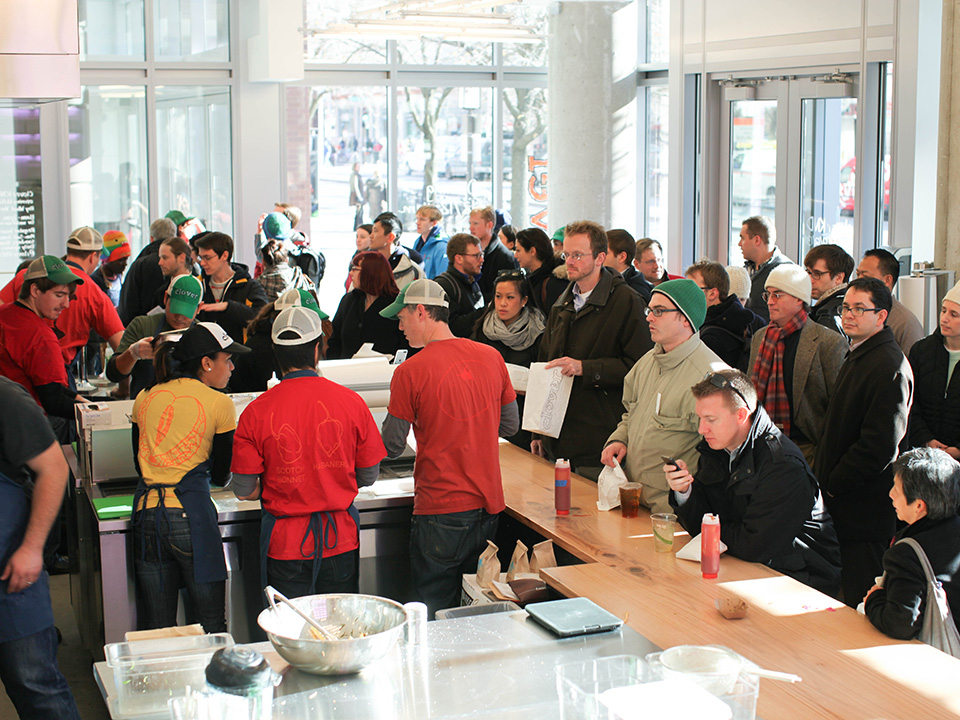
This is Fast Food. We’re obsessed with speed and constantly time ourselves. Our average serve times are around 3.5 minutes, which makes us a little slower than McDonald’s.

Many of you have been asking for more detail about the menu, so for the first time I’m gathering it all here. Enjoy!

Ayr Muir
Founder and CEO of Clover Food Lab

Banner-top

Read on to learn:
- How we think about taste
- Why you might think we’re crazy if you learn how we make food
- Why our menu is tiny, changes, and we run out
- What’s so special about our drinks
- How we source our ingredients
- Who develops our recipes
- How we think about nutrition and food
- What to eat at Clover if you have allergies or dietary restrictions


Taste

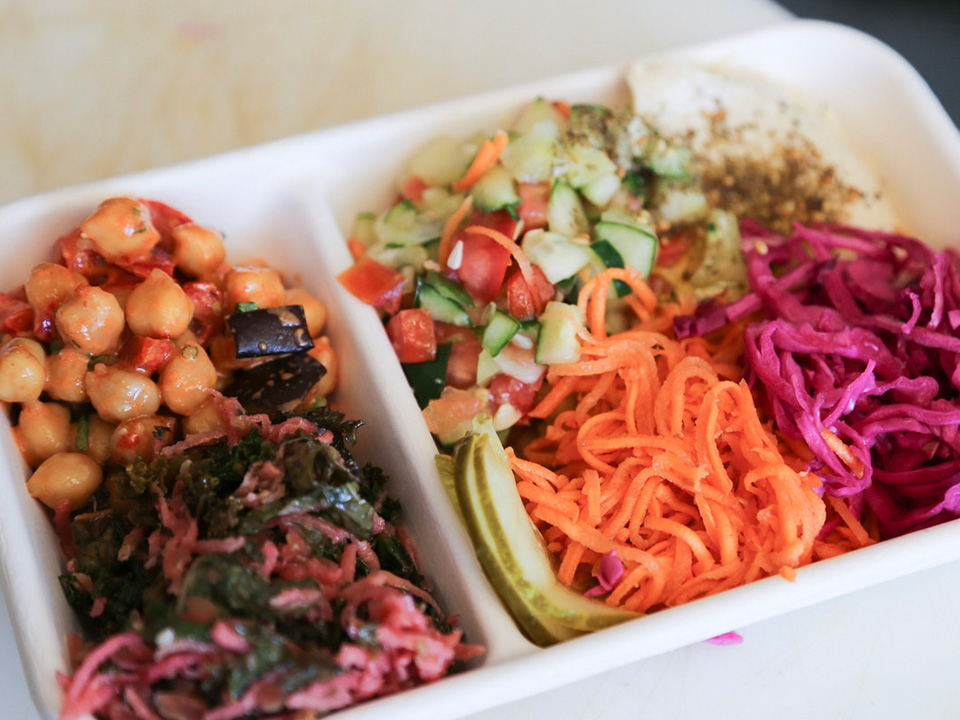
We taste all day long. This is one of the most important roles our managers and leaders have. We’re not working with frozen, blended, factory-made, or processed ingredients. We don’t use “flavor enhancers,” artificial or natural flavors, additives, preservatives, or anything else you’d need a chemistry degree to understand. We rely on the farmer who grew our parsnip for flavor, the soil that produced our carrot, the chicken that laid our beautiful eggs. This is core to how we make food. Sometimes our carrots are sweeter, sometimes less sweet. We taste, we balance, we taste again. I can’t promise you that anything you have from Clover will taste exactly the same one day to the next. But we all work very very hard to make sure that the quality we achieve, the depth of and cleanliness of flavors is consistently unrivaled.

The other year Rolando and I noticed we talk a lot about clean flavors. We both started using those words without much discussion and didn’t even think twice about it until somebody asked us what we meant. When we talk about clean flavors we mean a whole collection of things. Food that tastes clean is food you want to hold in your mouth and savor. It’s not food you want to scarf down without thought. It’s food that has subtle aftertaste you enjoy. It feels great in your mouth. It smells beautiful.

We’re talking about food that hasn’t been overcooked. Clean flavors come from the first run, not from food that has been reheated or “flashed” right before service. We’re talking about food that hasn’t oxidized (common to food that is aging, think about how an apple slice turns brown). We’re talking about the lack of “off” compounds that come from sloppy cooking methods. Think about a bright yellow yolk that comes from shocking the egg in ice after boiling it for the exact right amount of time, not the grayish yolk and off flavors that come from overcooking and/or slow cooling. We’re talking about the lack of contamination of flavors (our onion cutting boards are never used for anything else). Clean flavors are identifiable. They are complex because the ingredients themselves have wonderful complexity, not because a lot of other ingredients are added on. When we talk about clean flavors we’re talking about flavors absent of chemical or natural additives. One of the reasons we make everything from scratch is that we want to leave out common additives like citric acid, fats we don’t like, and other additives that are in processed food. Not because citric acid is somehow bad, it just doesn’t taste clean. We don’t necessarily have anything against dirty food, but it’s not what we’re working hard every day to make.

Banner-How-we-work

If you work at Chipotle, or Panera, or McDonald’s you might think we’re crazy

At Clover we do a lot of things unlike other fast food companies. Why? For taste of course.

It’s hard to overstate how radically different we operate vs. our competitors. The way we operate is unheard of in our industry. I mean unheard of to the point that others don’t believe me until I show them around. No, really, there is no back-of-house, everything we do is visible to our customers. At Clover we:

- Have no freezers. In the entire company. Not one.
- Change our menu day-to-day to stay in sync with the best tasting seasonal ingredients.
- Cut food as close as we can to when you’re going to eat (e.g., tomatoes are cut when you order)
- Keep your money in your region. (40-85% of our ingredients are from the Northeast)
- Use an unheard of amount of organic ingredients (typically 30-60% depending on time of year)
- Don’t EVER use any preservatives, “natural flavors,” “flavor enhancers,” “artificial flavors”*
- Make food that will improve your health (no need to tell the kids, but that food is good for them)
- Allow you to see us making your food. We have no “back of house” anywhere in our company.
- 100% of what we hand you is compostable. OK, nothing to do with taste. But it’s the right thing to do.

*This statement does not apply to the mayonnaise, and the Ketchup, which as I mentioned earlier, we don’t make.


Always changing menu and run outs

Since we don’t have freezers we work day-to-day with ingredients that have just come out of the ground, just been laid by a chicken, or just been picked. This fact defines our menu.

We have a small menu. Because we’re making everything from scratch we have to limit how much we do.

Our menu changes day-to-day. Because what is in season changes day to day, not every 3 months or 3 years.

We run out of items. We know this can mean we disappoint, but since we’re not working with shelf-stable or frozen foods we only have 2 choices: a lot of waste because we always have an oversupply or running out because we’re keeping the food fresh. We choose to run out.

So our menu is tiny, changes day-to-day, and we run out of stuff. That’s why we write it on a whiteboard, because it changes so often. It’s also why we can experiment so much with our food.

Banner-drinks

Drinks

We’re developing a reputation for our drinks. You may have had our cinnamon lemonade, mulled cider, a blackberry switchel, maple soda, hibiscus iced tea, Barrington Coffee, or Pretty Things Jack D’Or beer. For most fast food beverages are an afterthought, a Coke or Pepsi fountain that earns high margins. We think of drinks a little differently.

Early on Rolando and I wanted to make drinks a part of our culinary conversation. So we started asking questions. Shouldn’t a great chef know as much about the coffee she’s serving as she does the sauce on the plate? Why should our sodas be made with who-knows-what? Why shouldn’t beverages be made daily? Why shouldn’t they change with the availability of ingredients? The most important question: how amazing can this drink taste?

So we started developing drink recipes right alongside our sandwich, salad, and soup recipes. We started visiting coffee roasters around the country, watching them roast, asking questions, and tasting and tasting and tasting. We started visiting New England breweries, and tasting and tasting.

I think one of the amazing things about our beverages is that while we’re not making anywhere near the beverage profit margin others expect, we’re still able to make money. We can make money selling you some the most amazing tasting liquids. It’s a beautiful thing. I don’t think I’d call it greed, but most other food operators, fast food as well as fine dining, just don’t focus on what their beverages taste like as much as they focus on what they’re making from selling those beverages.

Banner-Ingredients

Ingredients

We put a ton of energy and thought into what we source and from whom. We showcase the best items we can buy. And if something is out of season or not available at the quality we love we just don’t use it, selecting instead something that makes better sense for that time of year.

When we started we bought almost everything from Russo’s, a regional mid-sized produce distributor. I went to meet Tony Russo, told him what I was up to, and we went from there. I’d known of Tony for a long time. His produce is the best in Boston markets. He’s been around for a long time (dig up an old Julia Child book and you’ll see she thanks Russo’s for their amazing produce). Tony understood what we were up to and would call me to tell me he had amazing shitake from Williamstown, MA, or potatoes from Hadley, MA. He knows all of the commercial growers in the Northeast. He could tell us when we just couldn’t get stuff locally which was as important as knowing what we could get locally.

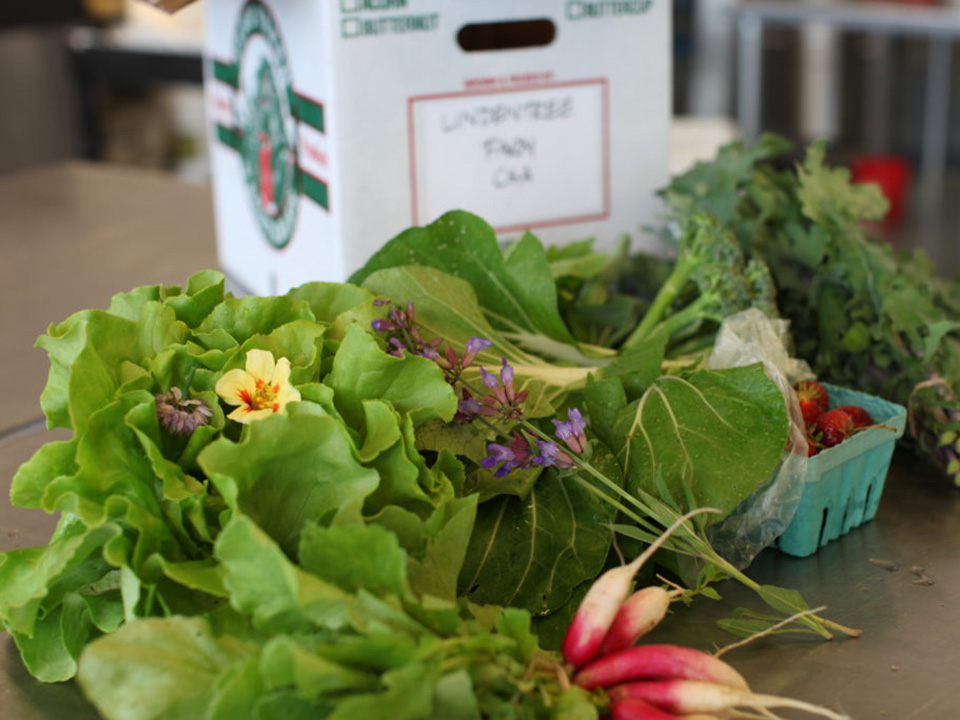
We still buy from Tony, and now our volumes are much larger and growing. We’ve recently started to develop some direct relationships with suppliers. We had the pleasure of serving amazing tomatoes from Lindentree farm this past season. And coming into 2013 Lindentree, one of the best organic growers in my opinion, is planting for us. This is a dream. We’d always hoped to get to this point and it’s happening sooner than we expected. We’re buying a huge amount of beautiful roots this winter from Winter Moon Roots of Hadley, VT. All of our honey is bought directly, as is our maple syrup. We expect to develop more direct relationships as we grow. I’ll admit, we’ve used items from my garden (e.g., mint for lemonade) but this isn’t common. I only harvest 3 times a year : ) Eddie who runs our kitchen has brought us some delicious things as well.

Some of our supply relationships are something of a hybrid between distributor and direct sourcing. For example, we love Chip-N-Farm eggs. We have Chip-N-Farm pack our eggs in special boxes that are labeled just for Clover. Tony picks them up in Bedford, MA 3 times a week, and delivers them to us directly. We do something like this with other high-volume critical ingredients (e.g., our potatoes, yogurt, cheese etc.).

Rolando brought an organization called Farm Fresh Rhode Island/ Market Mobile to Massachusetts. He knew of them from living down there and really wanted them to expand to Mass. They weren’t sure it would make sense. So Rolando went around to a bunch of local chefs in Boston, convinced many of them to take Farm Fresh as a distributor, and now they make the trip to Boston. Market Mobile is a Farm-To-Business delivery service. Sort of like a regional distributor, but with better technology and a more direct model, and only local. We love what they’re doing.

We buy spices from Raymond at Christina’s Spices (they also have a retail presence). There are a few  other items we buy from smaller scale regional suppliers.

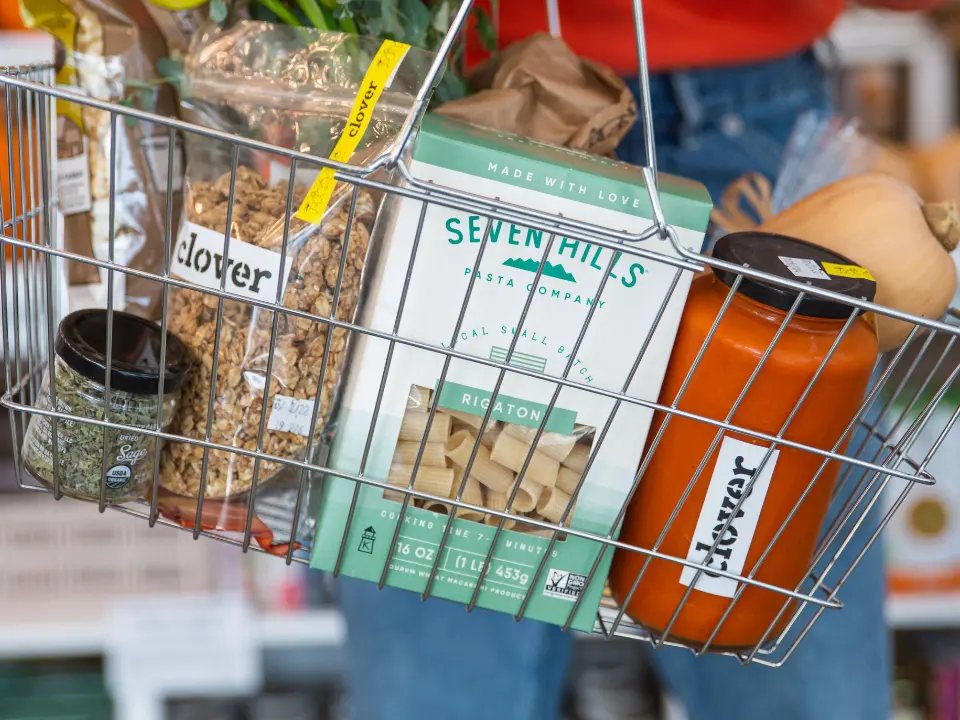
We buy shelf stable organic products from UNFI. This includes flour, chickpeas, etc. UNFI is an enormous organic distributor who primarily supplies Whole Foods. We buy fry oil from large national mainline suppliers (US Foods currently).

Beer, coffee, and tea are products we sell that we have very little hand in making. So we do our best to know those who are doing the making. In the case of beer we don’t feature a brewer unless we’ve had a chance to visit the brewery, meet the brewer, and understand their philosophy. We’ve handpicked all of the beers we sell and know our brewers very well. Coffee is a similar process. We feature some of the best roasters in the world. We’ve developed relationships with any roaster we feature before brining them in to Clover. We see them roast, get to know the owner, ask questions about their approach and philosophy. I don’t believe there is anyone who has visited more brewers or roasters than Rolando and I. It’s been a unique and really fun journey.

Similar efforts apply to our tea (herbals are grown and mixed by Mary Blue of Farmacy Herbs, green and oolong are from Asha Teas and Tea Trekker). It took me almost 3 years to find tea of the quality we wanted. We couldn’t be happier with what we’re now offering.


Recipes

Everything we are today, every single recipe, everything we do, has been developed with help from our customers. We invite you to join those who are helping us improve every day.

Clover’s menu is in constant development. We make mistakes all the time. We work hard to make sure those mistakes are cheap, and that we learn from them. We’d rather share a rough recipe with you and ask you what you think than drive an item to final and tell you how great it is. This core philosophy explains why we got started with a truck in the first place.

To be clear, we never make food we think tastes bad. There are important internal controls. The most senior folks in the company meet weekly to discuss food. We taste, we talk about ideas, and we plan. But just because Rolando, or I, or Chris, or Enzo, loves the way something tastes isn’t enough. We set our ego aside and find out what you think.

If you have any comments, ideas, etc. the best way to share those with us is through our order takers. They collect all of the feedback they hear in a day and share it up. If you’re not near a location, or not the talking type, you can use Twitter, or comment here on the website.


Nutritionals

We’re a small company but we think it’s important you know what you’re eating and part of that transparency extends to nutritional content. We’re working to create a database of the nutritional content of all of our menu items, but we’re not there yet. We have an entire page devoted to this topic.


Gluten-free, allergies, sensitivities, dietary restrictions, vegan, etc.

Please ask. We work hard to make sure our order takers are well armed to answer your questions. We’re honest about the fact that we may have cross-contamination in our kitchens. We do our best to provide options for a range of eating habits, preferences, and restrictions.

We hear a lot of questions about gluten-free options. Our kitchens are not gluten free. The falafel recipe does not have any wheat flour (unlike most falafel), instead we use GF corn flour. At the restaurants we have platters available without bread. At the trucks we have “boats” which is a sandwich without the bread. We are exploring a GF bread option.

We can modify most items to make them vegan upon request. This includes two of our most popular sandwiches, the Soy BLT and the BBQ Seitan.

We’re not asking you to ditch the Bruins tonight…

IMG_9069

Mystic Brewery happens to hit Clover on the same day as the Bruins play in the Stanley Cup. I know, it’s an exciting night for Boston. I’m asking permission to broadcast the game on a small iPod  : )

But I don’t want to detract from the amazing beer that’s about to happen here. 8pm tonight, Bryan from Mystic will be at CloverHSQ with a keg of his brand new Summer Saison. You’ll have time to grab a glass and have a chat even before the first period ends.

What does Saison Dupont have to do with Clover’s next beer?

IMG_8848

Wednesday we launch Mystic Brewery’s Summer Saison.

I sent Kayla to Liquor World to buy a bottle to taste at our manager meeting, but we realized it’s not even on shelves yet! So we tasted Saison Dupont for a reference. This is a beer brewed in Toures, Belgium. When we visited Bryan of Mystic, he told us this beer is basically his reason for making beer.

It’s got a crazy texture, sort of soft and bubbly on your tongue. Kind of like champagne. Perfect for summer. Bryan is going to be breaking open the first keg of his summer saison for Clover customers. Join us?

MYSTIC SUMMER SAISON LAUNCH
with Bryan Greenhagen, brewer
6/19, 8pm-10pm at CloverHSQ (7 Holyoke St)

Clover tahini

IMG_4125

Tahini is a sauce made from sesame seeds. We drizzle tahini over our fried falafel and fried eggplant.

Tahini is nutty and creamy. I’ve been learning how important it is in the Middle East. It’s an ingredient in hummus and baba ghanoush, but it’s also used as a sauce for meat, fish, and vegetables. You can add parsley, garlic, yogurt. You can make it thinner or richer depending on what you’re serving it with. Claudia Roden has a recipe for a chunkier tahini dip made with walnuts. My Lebanese cookbook has a different tahini depending on whether it’s destined for eggplant, butternut squash, fish, or meatballs.

If you want to make it at home, you need to get your hands on some Tahina (a really thick sesame paste, we love the tahina from Sunshine Bakery in Methuen). Continue Reading →

In defense of Rhubarb

IMG_8576

Some people are very scared of rhubarb. I had a customer who politely declined to sample our rhubarb agua fresca because she said rhubarb was poisonous. Luckily only the leaves are toxic, and you would have to eat 30kg in one sitting to get sick. At Clover we treasure rhubarb. It’s the first fruit of the season. It dovetails with strawberry season. So in this part of the world you see strawberry rhubarb pie.

We’re developing a rhubarb syrup. I thought we’d share the recipe here and invite you to try it at home and give us your feedback. Serve with carbonated water and ice. Or do what Ayr does and make a cocktail with rhubarb and gin. The juniper in gin opens up all kinds of tropical notes in rhubarb.

You’re getting restaurant quantities here. We recommend scaling it down. Unless you’re having a ton of people over for rhubarb cocktails, which is not a bad thing. Recipe after the break.  Continue Reading →

Last parsnips of the season

IMG_8269

We all get excited when parsnips hit our menu. They are the first vegetable to be harvested in New England. That’s because they winter underground. There are 2 crops: autumn and spring. The spring crop is more rare, more work, many farmers don’t bother. But if you can find them they are amazing. The parsnips are like sugar after the winter underground. We’ve noticed you can tell you have a spring dug if there is a little green at the top, not much, just starting to sprout.

If you treat the parsnips right (keep them cool), they are sugary and soft and irresistible. If you let them sit out in warm weather they turn sort of woody in the center. It’s funny, they look sort of gnarly and tough, but they’re super fragile. We get ours from Western Mass and Rhode Island.

We’re about to run through the last of our spring parsnips this year. Look for them in our salads, soups, and our Parsnip Cheddar sandwich, which has been a huge hit. We’re days away from moving on to the next bounty of the season.

Garlic Mustard is back on the menu

IMG_5943


That’s garlic mustard. And my hand, pulling it up.

Garlic Mustard is a culinary herb that was brought here to eat by some settlers a while back. Unfortunately, it doesn’t just taste good, it spreads very quickly and chokes out all of the indigenous undergrowth. So some towns, like mine, have organized garlic mustard eradication efforts. There are organized “pulls,” information sessions, folks at the waste station handing our recipes and bags and instruction. You can even call a hotline and have somebody pick up your garlic mustard bag from your house.

Last year I pulled some and brought it in to taste. We made a garlic mustard pesto and it was tasty. This year we decided to go a bit further. I brought almost 100 lbs to the kitchen. Look for it in the our garlic mustard pesto salad. It’s been a big hit. We have a ways to go, but if we’re successful with this one we’ll have less and less garlic mustard each year.

Rolando transitions

IMG_2169

I expect most of you know Rolando, our Executive Chef. Rolando was my first hire at Clover back in 2008. And that experience set the tone for the adventure ahead. A couple months before I hired Rolando I was certain I was going to outsource the menu development to a well known chef. Fast forward a few months and I’d abandoned that path in favor of hiring somebody who could breath life into our menu day-in and day-out.

Rolando and I met almost by accident. I called him asking if he had any former students who may be interested in what I was taking on (he was a professor at Johnson and Wales University at the time). He said “I’d be interested,” and we had coffee the next day and hit it off immediately.

Rolando has been commuting to Boston from Providence for the better part of the past 4 years. He asked me the other day whether we could arrange something that would have him working here part time for a bit so that he can be closer to his family the rest of the week. I think we’ll all be less for not getting to work with him daily, but it just means we’ll have to get a lot out of the days he is here. He’s going to be working a second job in Providence to make this work. We’re hoping it’s a short term arrangement.


Parsnip explanation

IMG_6515

We’re learning that storage is as important as growing when it comes to root vegetables. Did you know that parsnips stop growing while they’re under the ground? During this time, all the starches get converted to sugar. If they aren’t harvested fast enough in the spring, they start to grow again and can become bitter and woody.

Hugh of Sugar Mountain has been growing the sweet parsnips you’ve been enjoying in the Parsnip sandwich. They’ve been just beautiful. Then last week we noticed some were tasting like soap. Hugh called. Apparently one of his root cellars was installed improperly, meaning some of our parsnips were bitter and woody. He’s removed all those parsnips, given us a refund on 120lbs, and sending us the remaining ones, which are as sweet as sugar.

We pulled the parsnip sandwich last week when we noticed this problem. Which is why it’s been missing on the menu. We’ll have it back on the menu Wednesday.


Spring pea soup

IMG_8086

Spring pea soup is coming into the chilled soup rotation.

You can make this soup at home if you have a blender. We use caramelized onions, a touch of coconut & soy milks, frozen peas, vegetable stock and mint. It’s garnished with yogurt and pistachios. The secret is to blend it and thin it out so that it’s NOT A SMOOTHIE. You want a nice thin viscosity if you want it to taste good.

We’re doing a bunch of cooking classes this summer, including one on chilled soups. Sign up here.

Fresh kimchi

IMG_8082

What do you think of kimchi?

Michael Sutton, veteran of OYa, is running Clover Burlington. He had an idea to do something with kimchi. It’s something we’ve been thinking about for a while, but we never wanted to do it because we were worried about the smell. But Mike said it doesn’t have to be fermented. He made up a batch of fresh kimchi for us to taste. It was really yummy. Maybe a component for a seasonal sandwich?